Classroom Routine Generator: 10 Ways to Create Better Classroom Routines
A successful classroom does not happen by accident. Behind every organized and productive learning environment, there are clear routines that help students understand what to do, when to do it, and how to participate effectively. A Classroom Routine Generator helps teachers create practical daily routines that save planning time and improve classroom management.
Teachers often spend countless hours preparing lessons, managing student behavior, and organizing classroom activities. Creating effective routines from scratch can become another challenging task. A routine generator provides teachers with ready-to-customize ideas that match different grade levels, teaching styles, and classroom goals.
For more information about effective teaching strategies, teachers can also explore resources from Edutopia for classroom management ideas and learning strategies.
Whether you are a new teacher setting up your first classroom or an experienced educator looking for fresh ideas, a Classroom Routine Generator can help you design smoother transitions, better learning habits, and a more positive classroom culture.
In this complete guide, you will learn what a classroom routine generator is, why classroom routines matter, how these tools work, and how teachers can use generated routines to create a more organized and engaging learning environment.
What Is a Classroom Routine Generator?
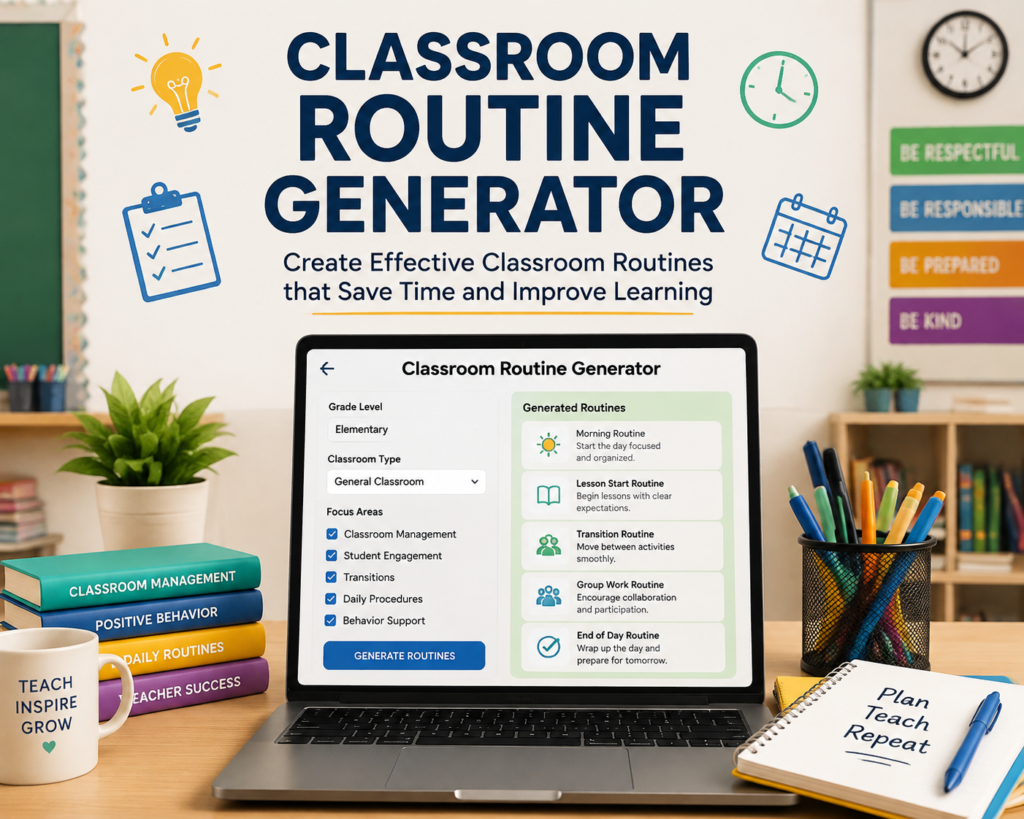
A Classroom Routine Generator is a digital tool that helps teachers create structured classroom routines based on their specific teaching needs. Instead of creating every routine manually, educators can generate ideas for daily activities, transitions, classroom procedures, and student responsibilities.
Classroom routines are repeated actions that create consistency in the learning environment. They guide students through common classroom moments such as entering the classroom, starting lessons, completing assignments, working in groups, and preparing to leave.
A routine generator gives teachers a starting point by suggesting organized routines that can be modified according to student age, classroom size, subject area, and learning objectives.
Why Classroom Routines Are Important
Strong classroom routines create a predictable environment where students know what is expected from them. When routines are clear, teachers spend less time managing unnecessary disruptions and more time focusing on instruction.
Students also benefit because they feel more confident when they understand classroom procedures. Predictability reduces confusion and helps learners become more independent.
Effective classroom routines help teachers:
- Create a more organized classroom environment
- Reduce repeated behavior problems
- Improve student independence
- Save valuable teaching time
- Increase student engagement
- Create smoother classroom transitions
How a Classroom Routine Generator Helps Teachers
Creating classroom routines requires understanding student behavior, classroom goals, and learning activities. A Classroom Routine Generator makes this process easier by providing structured ideas that teachers can customize.
1. Saves Valuable Planning Time
Teachers already manage many responsibilities, including lesson planning, grading, communication with parents, and supporting students. Spending extra hours designing classroom routines can be difficult.
A routine generator reduces planning time by providing ready-made suggestions that teachers can quickly review and adapt.
2. Creates Consistent Classroom Procedures
Consistency is one of the most important elements of effective classroom management. When students experience the same routines every day, they understand expectations and become more confident.
For example, a consistent morning routine may include:
- Entering the classroom quietly
- Organizing materials
- Checking the daily schedule
- Completing a warm-up activity
3. Supports Different Grade Levels
Every classroom has unique needs. A routine that works for kindergarten students may not work for high school learners.
A useful Classroom Routine Generator helps teachers create routines suitable for:
- Preschool classrooms
- Elementary schools
- Middle school classrooms
- High school environments
- Online learning spaces
4. Improves Classroom Management
Many classroom disruptions happen because students are unsure about what they should do next. Clear routines remove uncertainty and create a smoother learning experience.
Instead of repeatedly giving the same instructions, teachers can establish routines that students naturally follow.
How Does a Classroom Routine Generator Work?
A classroom routine generator usually works by using teacher input to create customized routine suggestions. The process is simple and designed to save educators time.
Step 1: Choose Your Classroom Information
Teachers provide details such as:
- Grade level
- Subject area
- Classroom type
- Student needs
- Teaching goals
Step 2: Generate Routine Ideas
The tool creates possible routines based on the information provided. These may include classroom entry procedures, lesson activities, transitions, group work routines, and closing activities.
Step 3: Customize Generated Routines
Generated ideas should always be adjusted according to classroom requirements. Teachers can change wording, add personal strategies, and make routines match their teaching style.
Step 4: Teach and Practice Routines
The best routines are not simply announced; they are taught and practiced. Students need opportunities to understand and repeat routines until they become natural habits.
Key Features of an Effective Classroom Routine Generator
A high-quality routine generator should provide more than random suggestions. It should help teachers create useful, realistic, and classroom-friendly routines.
Customizable Routine Suggestions
Teachers should be able to modify generated routines according to their classroom environment and student needs.
Age-Appropriate Ideas
Effective routines should match students’ developmental level. Younger students need simple instructions, while older students can handle more independent procedures.
Multiple Classroom Scenarios
A useful generator should support different situations, including:
- Morning classroom routines
- Lesson preparation routines
- Group activity routines
- Technology use routines
- End-of-day procedures
15 Classroom Routine Examples Teachers Can Use
Teachers can also improve their teaching workflow by exploring our guide on AI tools for teachers, which explains how technology can support modern classrooms.
A classroom routine generator becomes more useful when teachers understand what types of routines can improve daily classroom activities. The following examples can be customized for different grade levels and teaching styles.
1. Morning Arrival Routine
For better classroom management strategies, teachers can read our complete guide on classroom management and learn practical ways to create a positive learning environment.
The first few minutes of the school day set the tone for the entire classroom. A clear arrival routine helps students start the day with confidence.
- Students enter calmly
- Students organize their materials
- Students check the daily schedule
- Students complete a morning activity
2. Lesson Beginning Routine
A consistent lesson start routine helps students transition from preparation mode into learning mode.
- Review learning objectives
- Prepare required materials
- Complete a short warm-up activity
- Listen to lesson instructions
3. Classroom Transition Routine
Transitions between activities can become chaotic without clear procedures. A classroom routine generator can help teachers create smooth transition plans.
- Students stop activities when the signal is given
- Students move safely between tasks
- Students prepare materials for the next activity
4. Group Work Routine
Group activities become more successful when students understand their roles and responsibilities.
- Assign group roles
- Share ideas respectfully
- Complete tasks together
- Present group results
5. Homework Routine
A homework routine helps students develop responsibility and organization skills.
- Record assignments correctly
- Ask questions before leaving
- Submit work on time
6. Technology Use Routine
Digital classrooms require clear technology procedures to avoid distractions.
- Use devices only for learning activities
- Follow digital safety guidelines
- Store devices properly after use
7. Classroom Discussion Routine
Discussion routines encourage students to participate while respecting different opinions.
- Raise hands or follow discussion rules
- Listen when others speak
- Respond respectfully
8. End-of-Class Routine
A strong closing routine helps students finish lessons in an organized way.
- Review important points
- Complete exit activities
- Organize materials
- Prepare for the next lesson
Classroom Routine Template for Teachers
Teachers can use this simple template to create customized routines for their classrooms.
| Routine Type | Purpose | Example |
|---|---|---|
| Arrival Routine | Create a positive start | Greeting, materials setup, morning task |
| Learning Routine | Improve lesson focus | Warm-up, instruction, practice |
| Transition Routine | Reduce wasted time | Move between activities smoothly |
| Closing Routine | End lessons effectively | Review and prepare for next class |
Classroom Routine Generator vs Creating Routines Manually
Many teachers create classroom routines manually based on their experience. While this approach can work, it often requires more planning time. A Classroom Routine Generator provides a faster starting point with ideas that teachers can personalize.
| Classroom Routine Generator | Manual Routine Creation |
|---|---|
| Saves teacher planning time | Requires more preparation |
| Provides ready ideas | Teacher creates everything from scratch |
| Useful for new teachers | Requires previous experience |
| Easy to customize | Complete control from the beginning |
How to Successfully Introduce New Classroom Routines
Creating routines is only the first step. Teachers must introduce and practice routines so students understand how to follow them.
Explain the Purpose
Students are more likely to follow routines when they understand why those routines are important. Explain how routines help save time and create a better learning environment.
Demonstrate the Routine
Teachers should show students exactly what successful behavior looks like. A quick demonstration is often more effective than a long explanation.
Practice Regularly
Students need repetition before routines become automatic. Practice important routines during the first weeks of school and whenever changes are introduced.
Provide Positive Feedback
Recognizing students who follow routines encourages others to develop the same habits. Positive reinforcement helps create a supportive classroom culture.
Common Mistakes When Creating Classroom Routines
Creating Too Many Routines
Too many procedures can overwhelm students. Teachers should focus on the routines that have the biggest impact on classroom success.
Not Teaching Routines Clearly
Students cannot follow routines they do not understand. Every important routine should be explained and practiced.
Making Routines Too Complicated
The best routines are simple and easy to remember. Complex procedures often create more confusion.
Ignoring Student Feedback
Students experience classroom routines every day. Their feedback can help teachers improve procedures and make them more effective.
Frequently Asked Questions About Classroom Routine Generator
What is a Classroom Routine Generator?
A Classroom Routine Generator is a tool that helps teachers create organized classroom procedures, daily routines, and activity plans based on their classroom needs.
How can a Classroom Routine Generator help teachers?
It helps teachers save planning time, improve classroom organization, and create routines that support student learning and positive behavior.
Can classroom routines be customized for different grades?
Yes. Teachers can adjust generated routines for preschool, elementary, middle school, high school, and online classrooms.
How many classroom routines should teachers create?
Teachers should focus on important daily procedures instead of creating too many routines. A few strong routines are usually more effective than many complicated ones.
Are classroom routines important for classroom management?
Yes. Effective routines reduce confusion, improve student independence, and create a more organized learning environment.
Final Thoughts
A Classroom Routine Generator is a valuable resource for teachers who want to create organized, predictable, and positive classrooms.
While a generator can provide useful ideas, the best routines come from combining technology with teacher experience, student needs, and classroom goals.
By creating clear routines and teaching them consistently, educators can reduce classroom stress, improve student engagement, and spend more time focusing on meaningful learning.
Whether you are a new teacher or an experienced educator, using a Classroom Routine Generator can help you build a classroom environment where students feel confident, supported, and ready to succeed.