Random Student Picker: The Smart Way to Choose Students Fairly in the Classroom
Keeping every student engaged in the classroom is one of the biggest challenges teachers face. In a busy classroom environment, some students naturally participate more often, while others may remain quiet even when they understand the lesson.
Teachers can also explore official educational technology resources from trusted organizations such as Edutopia to discover more classroom engagement strategies.
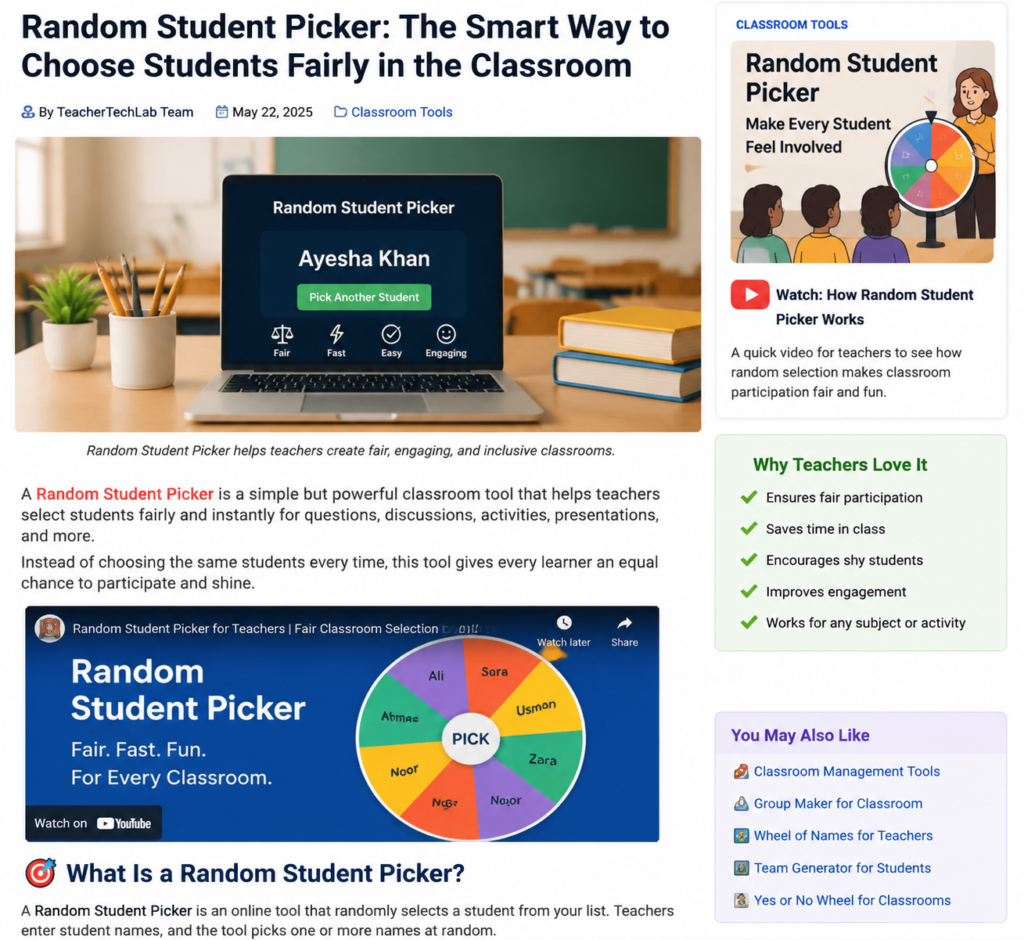
A Random Student Picker is a simple but powerful classroom technology tool that helps teachers select students fairly and instantly for questions, discussions, activities, presentations, and classroom participation.
Instead of always choosing the same students or manually selecting names from a list, teachers can use a Random Student Picker to create equal opportunities for every learner. This makes classroom participation more balanced, interactive, and engaging.
Modern teachers are using digital tools to save time and improve classroom management. A Random Student Picker is one of those practical solutions that helps educators focus more on teaching and less on repetitive classroom tasks.
What Is a Random Student Picker?
A Random Student Picker is an online tool that randomly selects a student from a classroom list. Teachers enter student names into the tool, and it automatically chooses one or more students whenever needed.
The main purpose of this tool is to make student selection fair, unbiased, and quick.
Teachers can use a Random Student Picker for many classroom activities, including:
- Answering questions during lessons
- Starting classroom discussions
- Selecting presentation groups
- Choosing activity leaders
- Encouraging student participation
- Creating random classroom teams
Unlike traditional methods such as calling students alphabetically or choosing volunteers only, a random picker gives every student an equal chance to participate.
For more information about digital learning practices, teachers can explore resources from U.S. Department of Education .
Why Teachers Need a Random Student Picker
Teachers often want every student to participate, but classroom dynamics can make this difficult. Some students raise their hands quickly, while others hesitate because they lack confidence.
A Random Student Picker removes this challenge by creating a fair participation system where every student has the same opportunity.
1. Creates Fair Classroom Participation
One of the biggest advantages of using a Random Student Picker is fairness.
Without a structured system, teachers may unintentionally call on the same students repeatedly. This can cause quieter students to participate less and miss valuable learning opportunities.
A random selection tool ensures that every student receives a chance to answer, share ideas, and become involved in classroom discussions.
2. Saves Valuable Teacher Time
Teachers manage many responsibilities every day, including lesson planning, grading assignments, and classroom organization.
Manually selecting student names for every activity takes unnecessary time. A Random Student Picker completes this task instantly.
- No need to write names on paper
- No manual selection process
- Quick classroom transitions
- Easy to reuse for different activities
3. Encourages Shy Students to Participate
Many students have good ideas but hesitate to volunteer answers. A random selection system encourages them to participate without feeling personally targeted.
When students know everyone has an equal chance, classroom participation becomes more natural and inclusive.
Random Student Picker vs Traditional Student Selection
| Traditional Selection | Random Student Picker |
|---|---|
| Teachers manually choose students | Students are selected automatically |
| Same students may participate often | Every student gets equal opportunity |
| Takes extra classroom time | Provides instant selection |
| Can include unconscious bias | Creates a fair process |
| Difficult for large classes | Works well with many students |
How Does a Random Student Picker Work?
A Random Student Picker is designed to be simple for teachers. Most tools follow a similar process:
Step 1: Add Student Names
Teachers begin by entering their classroom student list into the tool.
The list can include:
- Full student names
- First names only
- Class groups
- Activity participants
Step 2: Choose Selection Settings
Depending on the classroom activity, teachers can decide how the tool should work.
Possible settings include:
- Select one student
- Select multiple students
- Avoid repeating previous selections
- Create random teams
Step 3: Generate Random Selection
After clicking the selection button, the tool randomly chooses students from the list.
The teacher can immediately use the result for classroom activities.
Step 4: Continue Learning Activities
Teachers can repeat the process whenever they need a new participant, discussion leader, or activity member.
Benefits of Using a Random Student Picker in Education
Improves Student Engagement
Students become more attentive when they know they may be selected at any moment. This encourages active listening and better preparation.
A Random Student Picker transforms passive classrooms into more interactive learning environments.
Supports Inclusive Learning
Every student has different confidence levels and learning styles. Random selection gives all students opportunities to contribute.
This creates a classroom culture where every voice matters.
Real Classroom Examples of Using a Random Student Picker
A Random Student Picker becomes more valuable when teachers use it for real classroom situations. It is not only a name selection tool; it can improve classroom interaction, organization, and student confidence.
Example 1: Selecting Students for Question Answers
During a lesson, teachers often ask questions to check student understanding. However, relying only on volunteers means that only a few confident students participate.
Using a Random Student Picker allows teachers to give every student a fair chance to answer.
For example, after explaining a science topic, a teacher can randomly select a student to explain the concept in their own words. This encourages students to stay focused and actively listen.
Example 2: Classroom Discussion Activities
Group discussions help students develop communication and critical thinking skills. A Random Student Picker can help teachers choose discussion leaders or participants fairly.
Instead of selecting the same students every time, teachers can rotate participation and create a more inclusive classroom environment.
Example 3: Choosing Presentation Groups
Presentations are common in schools and colleges. Teachers need a fair way to decide which students will present first.
A Random Student Picker can randomly select presentation order, reducing arguments and making the process transparent.
Example 4: Classroom Games and Activities
Educational games become more exciting when participation is fair. Teachers can use a random selection tool to choose team members, game leaders, or activity participants.
This keeps students interested and creates a positive learning atmosphere.
Best Features to Look for in a Random Student Picker
Not all random student selection tools provide the same experience. Teachers should look for features that make classroom management easier.
1. Easy Student List Management
A good Random Student Picker should allow teachers to quickly add, remove, and update student names.
This is especially important for teachers who manage multiple classes.
2. No Repeat Selection Option
One useful feature is preventing the same student from being selected repeatedly.
This helps ensure fair participation and gives every learner a chance.
3. Multiple Student Selection
Sometimes teachers need more than one student. For example, they may need a team for an activity or several students for a discussion.
A powerful Random Student Picker should allow multiple selections.
4. Mobile-Friendly Design
Many teachers use tablets, laptops, or classroom screens. A good tool should work smoothly on different devices.
5. Fast and Simple Interface
Teachers do not need complicated software for a simple classroom task. The best tools provide quick results with minimal steps.
How Random Student Picker Improves Classroom Management
Classroom management is not only about controlling behavior. It is about creating an environment where students feel involved and responsible.
A Random Student Picker supports classroom management by creating a predictable and fair participation system.
Reduces Student Complaints
When teachers select students manually, some learners may feel that the process is unfair.
A random selection system removes personal preferences and makes the process transparent.
Creates Active Learning Habits
Students become more prepared when they know they may be selected at any time.
This encourages:
- Better listening
- More preparation
- Increased confidence
- Active classroom involvement
Builds Student Confidence
Regular participation helps students become more comfortable expcressing their ideas.
Over time, even shy students can develop stronger communication skills.
Random Student Picker for Online and Hybrid Classrooms
Modern education is no longer limited to physical classrooms. Many teachers now work with online and hybrid learning environments.
A Random Student Picker can also support virtual teaching.
Teachers can use it for:
- Online discussion participation
- Virtual classroom questions
- Breakout room selection
- Online presentations
- Remote learning activities
Digital classroom tools help teachers maintain interaction even when students are learning from different locations.
Common Mistakes Teachers Should Avoid When Using a Random Student Picker
1. Using Random Selection Without Purpose
Random selection is useful, but teachers should always connect it with a learning goal.
The tool should support teaching activities, not replace classroom planning.
2. Ignoring Student Needs
Teachers understand their students better than any software tool.
In some situations, teachers may need to consider student confidence, learning requirements, or special circumstances before selecting participants.
3. Using It Only for Questions
A Random Student Picker has many uses beyond question answering.
Teachers can use it for:
- Team creation
- Leadership roles
- Classroom games
- Presentations
- Peer activities
4. Not Explaining the Process to Students
Students should understand why random selection is being used.
When teachers explain that the goal is fairness and equal participation, students are more likely to accept and enjoy the process.
Why a Random Student Picker Is Better Than Choosing Volunteers Every Time
Volunteers are useful, but depending only on volunteers creates an imbalance in classroom participation.
Usually, the same confident students answer repeatedly while quieter students stay unnoticed.
A Random Student Picker creates opportunities for every learner to participate and helps teachers discover students who may have valuable ideas but rarely volunteer.
The Future of Random Student Picker Tools in Education
Education technology is changing the way teachers manage classrooms. Simple digital tools are helping educators reduce repetitive tasks and create better learning experiences for students.
The future of Random Student Picker tools will include smarter features that help teachers make classroom participation even more effective.
Future tools may include:
- AI-powered student participation insights
- Learning behavior analysis
- Automatic classroom activity suggestions
- Integration with learning management systems
- Advanced student group and team creation
However, technology should always support teachers rather than replace their professional judgment. Teachers understand their students, classroom environment, and learning goals better than any automated system.
How Teachers Can Use Random Student Picker Effectively
A Random Student Picker works best when combined with good teaching strategies. The goal is not only to select names randomly but to create meaningful participation opportunities.
Create a Supportive Classroom Environment
Students should feel comfortable sharing their thoughts. Teachers should encourage respectful discussions where mistakes are considered part of learning.
Combine Random Selection With Feedback
After selecting a student, teachers should provide helpful feedback and encouragement.
Positive reinforcement helps students become more confident and willing to participate in future activities.
Use Different Participation Activities
Teachers can combine random selection with different classroom methods, such as:
- Question and answer sessions
- Peer discussions
- Problem-solving activities
- Student presentations
- Classroom challenges
Frequently Asked Questions About Random Student Picker
What is a Random Student Picker?
A Random Student Picker is a classroom tool that randomly selects students from a teacher’s list. It helps educators choose participants fairly for questions, activities, discussions, and presentations.
Why should teachers use a Random Student Picker?
Teachers use a Random Student Picker to save time, improve classroom fairness, increase participation, and give every student an equal opportunity to contribute.
Can a Random Student Picker help shy students?
Yes. A Random Student Picker encourages participation from all students, including those who may not volunteer regularly.
Is a Random Student Picker useful for large classrooms?
Yes. Random selection tools are especially helpful for large classes because manually choosing students becomes difficult and time-consuming.
Can teachers use a Random Student Picker for online classes?
Yes. Teachers can use these tools for virtual classrooms, online discussions, remote presentations, and digital learning activities.
Does a Random Student Picker replace teacher decisions?
No. A Random Student Picker is a support tool. Teachers still decide how and when to use it based on their classroom needs.
What is the difference between a Random Student Picker and a random name picker?
A random name picker can be used for any type of selection, while a Random Student Picker is specifically designed for educational environments and classroom activities.
Why TeacherTechLab Recommends Smart Classroom Tools
Teachers spend a significant amount of time managing classroom activities. Small technology improvements can create meaningful changes in teaching efficiency.
A Random Student Picker is a simple solution that helps educators create fair participation systems, save time, and improve student engagement.
Whether you teach in a traditional classroom, online environment, or hybrid learning setup, practical education technology can make daily teaching tasks easier.
Conclusion: Make Classroom Participation Fair With a Random Student Picker
Every student deserves an opportunity to participate and share their ideas. However, managing classroom participation manually can be challenging, especially in larger classrooms.
A Random Student Picker provides teachers with a simple, fair, and efficient way to select students for classroom activities.
By using technology wisely, teachers can create more inclusive classrooms where students feel valued, confident, and engaged.
The purpose of a Random Student Picker is not just choosing a name randomly. It is about creating equal learning opportunities for every student.
TeacherTechLab helps educators discover practical technology tools that make teaching smarter, easier, and more effective.